Birding: Getting Started
Not bird watching!
As I’m sure you’ve all learned from the 2011 comedy film ‘The Big Year’ featuring Steve Martin, Owen Wilson, and Jack Black, dedicated birders do not like the term ‘bird watching’. Don’t ask me why, I don’t make the rules. The correct term is birding.
I won’t get into the details of this cinematic masterpiece or we would be here all day, but what I will say is it gives a hilarious look into the peculiar and fantastic lives of birders. If you haven’t watched the movie, perhaps you’ll be inspired to after reading this blog. Before you run away to your trusted streaming platform, let me tell you little bit about *birding*!
Birding is the act of observing and identifying birds for recreational or citizen science purposes.
Can you think of a time when you stopped to watch or admire a bird? Perhaps an American Robin in your front yard or a Mallard dabbling in a pond at the park. If so, congratulations, friend! You have dipped your toes into the fantastic world of birding.
There are many ways to enjoy birds or to be a birder. Some folks simply enjoy watching the birds at their feeder, perhaps as a way to enjoy a calm moment outdoors or to get to know their winged neighbours. Some folks are “listers” and keep a record of every bird they have seen or heard, sometimes in a given year or place. Some birders are community scientists who participate in data collection that contributes to the understanding of patterns and changes in the abundance or distribution of certain species or populations. Some folks have made birding their profession and conduct bird surveys for various purposes.
Then there are people like me who fit into all of these categories! A wrennaissance woman, you could say (a wren is a type of bird for those of you who haven’t had the pleasure of being aware of these cuties).
There are infinite ways to enjoy birds, and none of them are right or wrong!
Pay Attention
As you read you’ll notice a message I am emphasizing is, anyone can enjoy birds at any time! If you take one thing away from reading today, let it be this. You do not need any gear or background knowledge. You don’t need to wake up at 4:00 a.m. or travel long distances to the middle of the wilderness. You can enjoy birds anytime! Nirvana even wrote a song about this - cue, “Come as You Are”.
All you need to do is pay attention. Use your senses. If you are blessed with eyesight and the ability to hear, use them! Many people enjoy birds even without these senses (look up Birdability!).
Start walking to work without your headphones in and see what you hear. Maybe you’ll notice a delicate chip every morning by the same tree. Have your morning coffee outside in the spring and perhaps you’ll hear a dawn song of an American Robin. While you walk through the forest, listen for the drumming of a woodpecker or scratching of a chickadee’s beak against the bark, caching seeds for the winter.
Look up! Look down! Look all around you! Scan the trees when you take your dog to the park and see if there are any flitting movements within the leaves. Glance at the telephone wires above the sidewalk and look for a feathered body perched above you. I have experienced many occasions where I randomly glance upwards towards the sky and am delighted by a hawk or crane soaring over me in that exact moment.
Birds are all around us, we’re just often not paying attention.
Noticing birds is the first step, and an incredibly enjoyable one. First you notice, then you identify. Or maybe in your case you just want to see more birds, so you stop at noticing. That is a simple and beautiful thing, too.
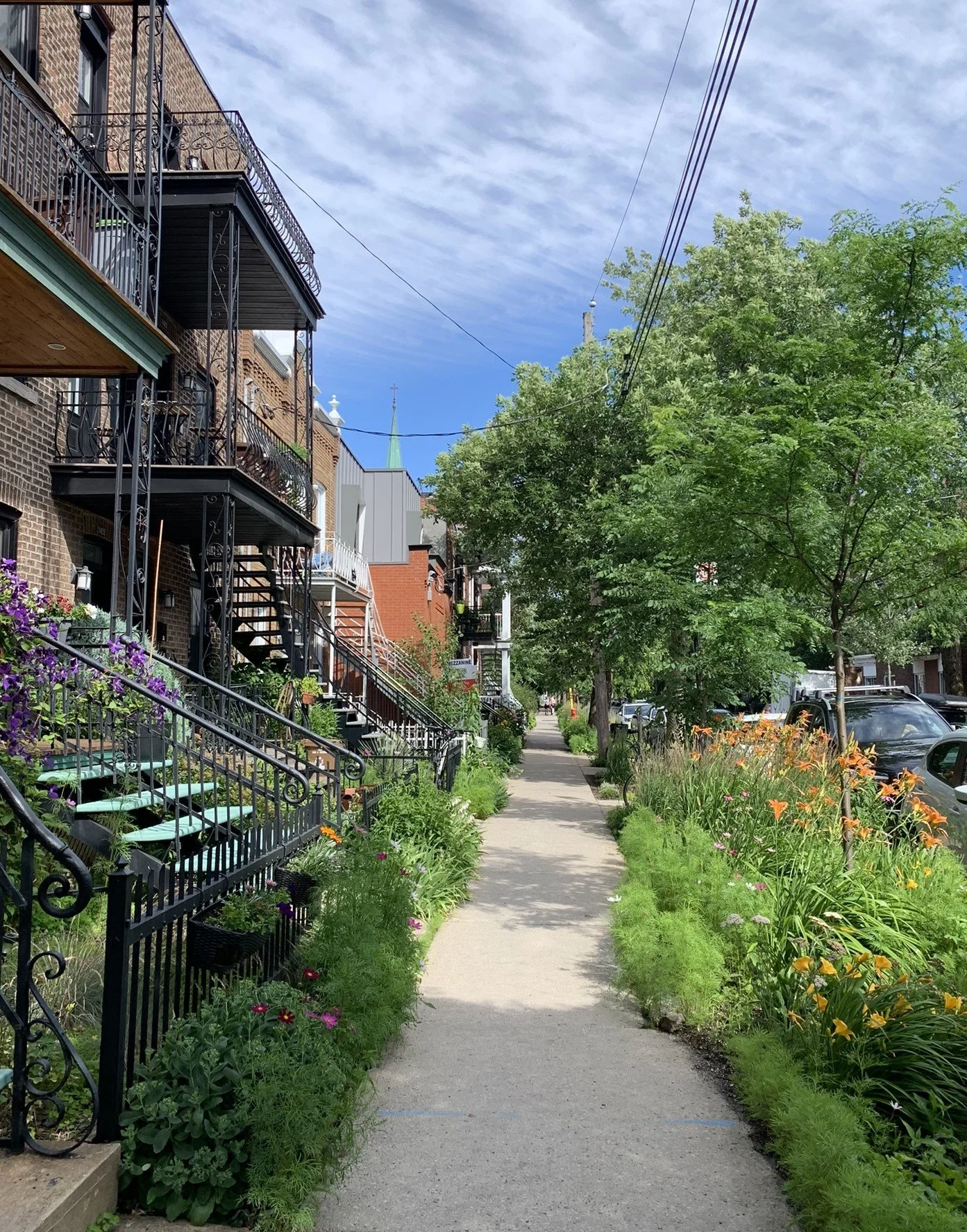
In the streets of Montreal some usual avian suspects are House Sparrows, European Starlings, House Finches, and Northern Cardinals (the only native species of this list).
Basic Tips
If you do want to learn more about the birds you’re seeing or how to identify them, here are some basic tips for getting started.
Get a bird book for your area.
Sibley Field Guide to Birds of Eastern North America,
The Sibley guide is my personal favourite, with informative life-history notes and detailed drawings; including those of both sexes, birds of different ages where relevant, plumage at different times of the year, and key identifiers of certain species (to name a few). I prefer Sibley’s drawings to guidebooks with photographs, since photos of individuals can’t always show variations across species, sexes, and positions of viewing. With that being said, everyone is different so you may prefer other options. Here are a few more that I have enjoyed.
Peterson Field Guide to Birds of Eastern and Central North America ,
Examples are given for eastern Turtle Island/North America and Ontario.
Download a bird identification App if you prefer apps over a book (even better, use both).
The Merlin Bird ID App is an incredible tool for identifying birds you see and hear. This is the first app I usually tell people to download (hint hint, go download it). If you’re trying to identify a bird you can input simple details like location, colour, size, and behaviour, and it offers you a list of potential species. The sound tool is like Shazam for birds; it uses a large dataset of recordings to match the bird sounds you record with your phone to give you suggestions. It’s not always perfect, but it’s pretty dang good. If it gives you a very rare species, take it with a grain of salt and talk to a local birder to confirm. I’ll talk more about this and some more app-caveats in following blogs.
Examples are given for apps I’ve used or have heard good things about. There are many more options out there.
Find a birding group in your area.
Don’t be intimidated if you are a beginner - reach out to other birders! Birding with others, especially experienced birders, is a fun and incredibly helpful way to learn more about birds and bird identification. Odds are there is a Facebook group or a group that gets together in person for birding events in your area. Check out your local naturalist groups or ask a bird friend (PS - if you’re reading this, we’re friends now... contact me anytime).
Here are some groups I know of that host birding events:
Thunder Bay Field Naturalists (Thunder Bay, ON),
Ontario Field Ornithologists (different locations in ON),
Queer Birders Montreal (Montreal, QC),
Queer Birders (New York, NY).
Use binoculars if you are able.
If you are wanting to see birds more in detail, binoculars are the tool to use. You don’t need the fanciest pair to help, although the more you spend, the better the clarity. You can also ask a friend, family member, or member of a field naturalist group to lend you a pair if you don’t have the means to purchase a pair. Some organizations have lending programs as well.
If you are buying a pair, 8x42 or 10x42 magnification levels are a good place to start. Before you buy, however, you’ll want to test them out at the store before buying to make sure they’re right for you.
If you plan to use them often on long walks or hikes, think about weight when you are purchasing.
A spotting scope can also be useful as you can set it up on a tripod which can reduce shakiness. However, they are expensive, less mobile, and require the bird to be staying in one place for an extended period of time.
I will talk more in detail about tips for finding the right pair of binoculars in a future blog.
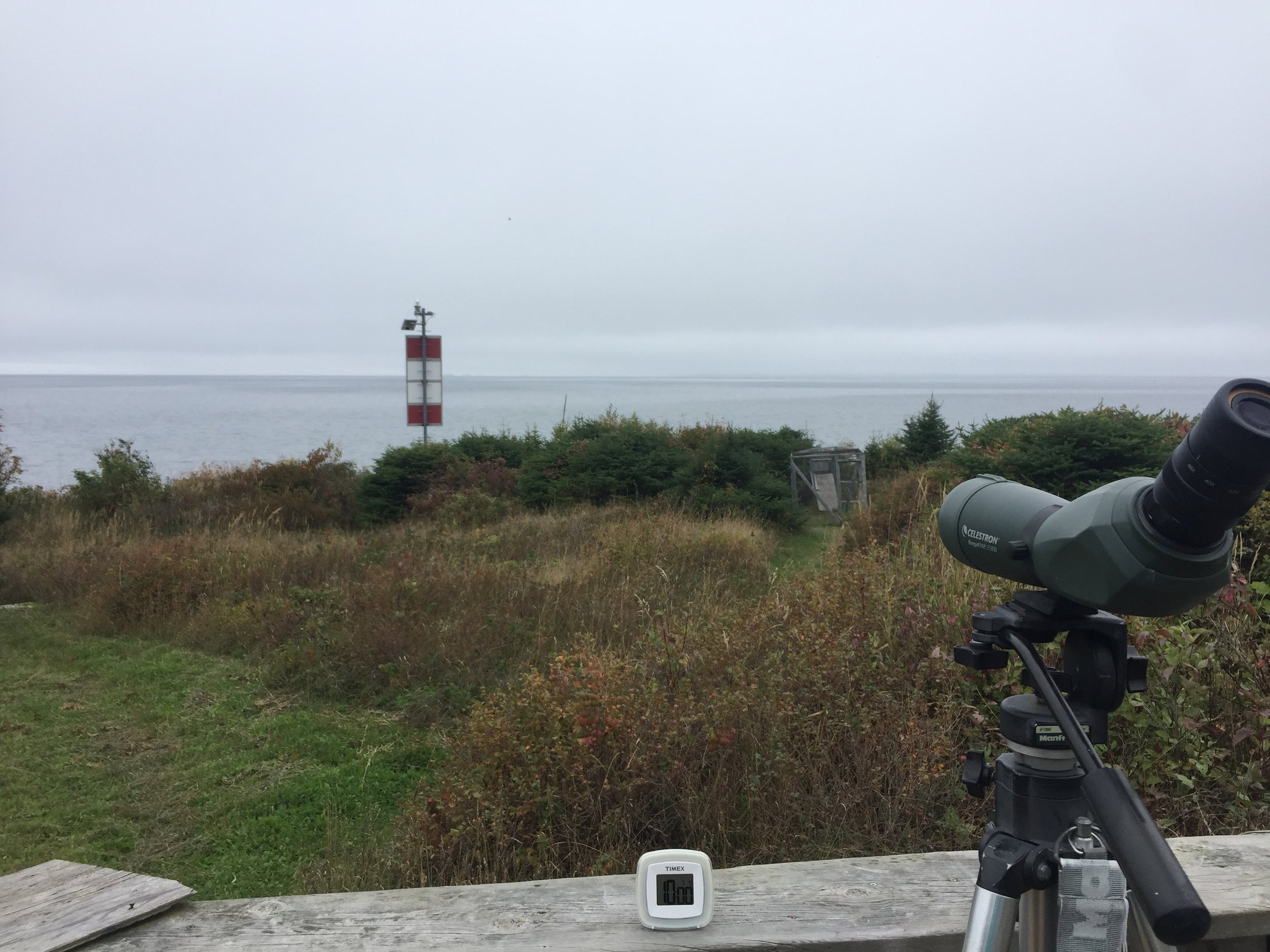
Using a spotting scope at Thunder Cape Bird Observatory on the lookout platform. As volunteers, we would spend eight hours a day on the platform counting birds.
When to go Birding
Those who are new to birding often ask me when the best time to bird is. Yes, it is true that the early bird gets the worm, however, factors like temperature, time of year, and food availability will contribute to changes in activity.
Many birds are most active at dawn, right after sunrise, and the morning hours following. This is especially true in the spring and summer, during breeding season. Many songbirds will be singing at this time to attract mates and defend territory. As a bird biologist we are often up in the wee hours of the morning during breeding season to count birds as the sun rises. I have spent many sleepy hours tucked in a dim forest listening to the dawn chorus. It is incredible to witness such a magnificent orchestra of trills and melodies.
If you are not a morning person, do not fret! Many birds are also active at different times of the day. Even during the afternoon you might see raptors in the air soaring in the warm air of the day. Some birds may also use this time for foraging or taking a backyard bath.
Dusk can be a great time to head out with your birding pals as well. Crepuscular species, who are most active at dawn and dusk, may be out foraging and calling. One example are Common Nighthawks, who are a joy to see and hear as they swoop and dive, feeding on insects mid-air with their gaping mouths open in flight. Depending on your location and the time of year, you may be also blessed with some calls from nocturnal species such as owls.
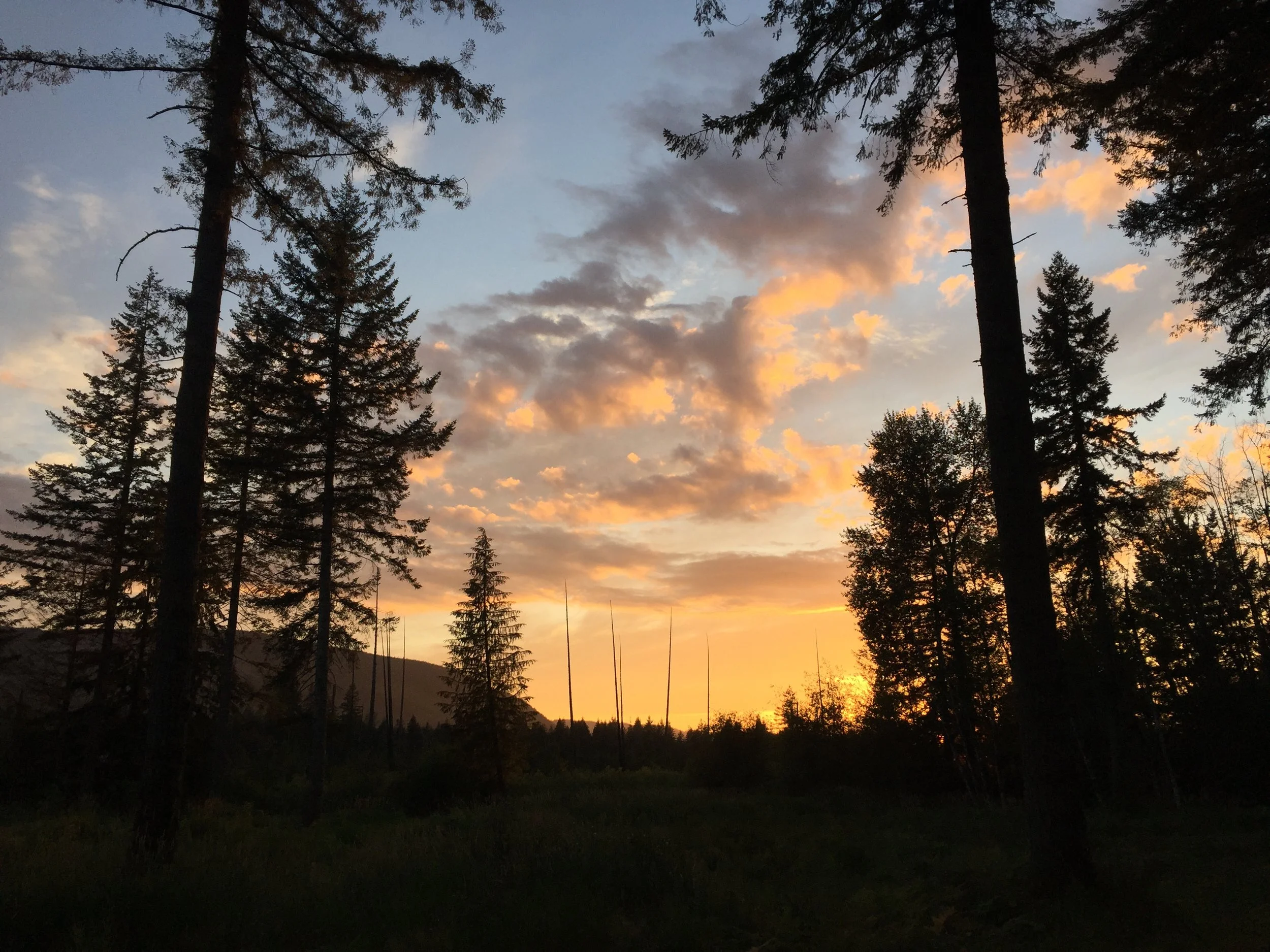
When I lived in a tent trailer on Vancouver Island for a summer, I was woken each morning before the sun rose by a dozen or more Swainson’s Thrushes’. Their ringing song echoing through the forest was so beautiful I wouldn’t even be upset by the early wake-up call.
The time of year will also greatly affect which birds you will see. Spring and fall migration is a great time to see a variety of birds. This is because birds that may not be residents in your area may be passing through on their way north (spring migration), or back down south (fall migration). This gives you a chance to see more unique species.
Spring Migration
In the spring birds are focused on breeding, which means that many are displaying their flashiest plumages (feather colour/patterns) to attract mates. They will also be singing during this time to defend their nesting territory and to attract mates.
This makes spring migration and breeding season a bright, loud, and exciting spectacle for birders. Migrants start to arrive around mid-May, though latecomers may continue travelling north into June. Peak breeding season is generally June-July, but differs depending on your latitude*.
Keep an eye out for evidence of breeding during this season as well! This can be anything from singing within the appropriate nesting habitat to gathering materials for nest-building; copulation (mating); or courtship displays such as feeding a mate or aerial (in-flight) displays - like that of many hummingbirds.
*This is written in an Ontarian context. You may find peak breeding times for your location in your province’s Breeding Bird Atlas.
Fall Migration
Fall migration is a bit different. During this period, August through October, many migrant birds are getting ready to return to their wintering grounds down south.
At this point, many birds have molted to their winter plumage which is often more plain or “drab” than breeding plumage. This makes fall birding a challenge for many birders, especially those identifying warblers. Warblers are small migratory birds who often have stunningly bright colours in the breeding season. Fall warblers are notoriously difficult to identify, even for experts, as the differences between species can be minute and tough to see if you can’t get a good look at the bird.
Another challenge that comes in the fall is sound identification. Male birds aren’t defending nests or territory or trying to attract mates anymore, meaning they generally aren’t singing, but rather calling. Some female birds do sing as well, however, which I will talk about more in the future.
Bird songs are complex and longer than calls. Many birds have only one or a few songs, which are relatively consistent, making them easier to identify (and enjoyable for the ears). Calls are usually short “chips” or “tseeps”, and are often incredible difficult to identify.
One thing I do absolutely love about fall birding is… babies! Okay, maybe not babies, but young (juvenile) birds. Once breeding season is over, a whole swath of new birds will be making their way south for the first time. For many species, the juveniles start off with different plumages than adults. This means that you might be able to tell which birds are young. There can be other hints too such as clumsy behaviour or continuous begging for food from parents (see the photo below).
Needless to say, they are cute cute cute! You can start looking out for baby birds beginning as early as June, and into August or September. Some birds raise several clutches of babies throughout the breeding season, which is why you may continue to see juveniles for an extended period of time.
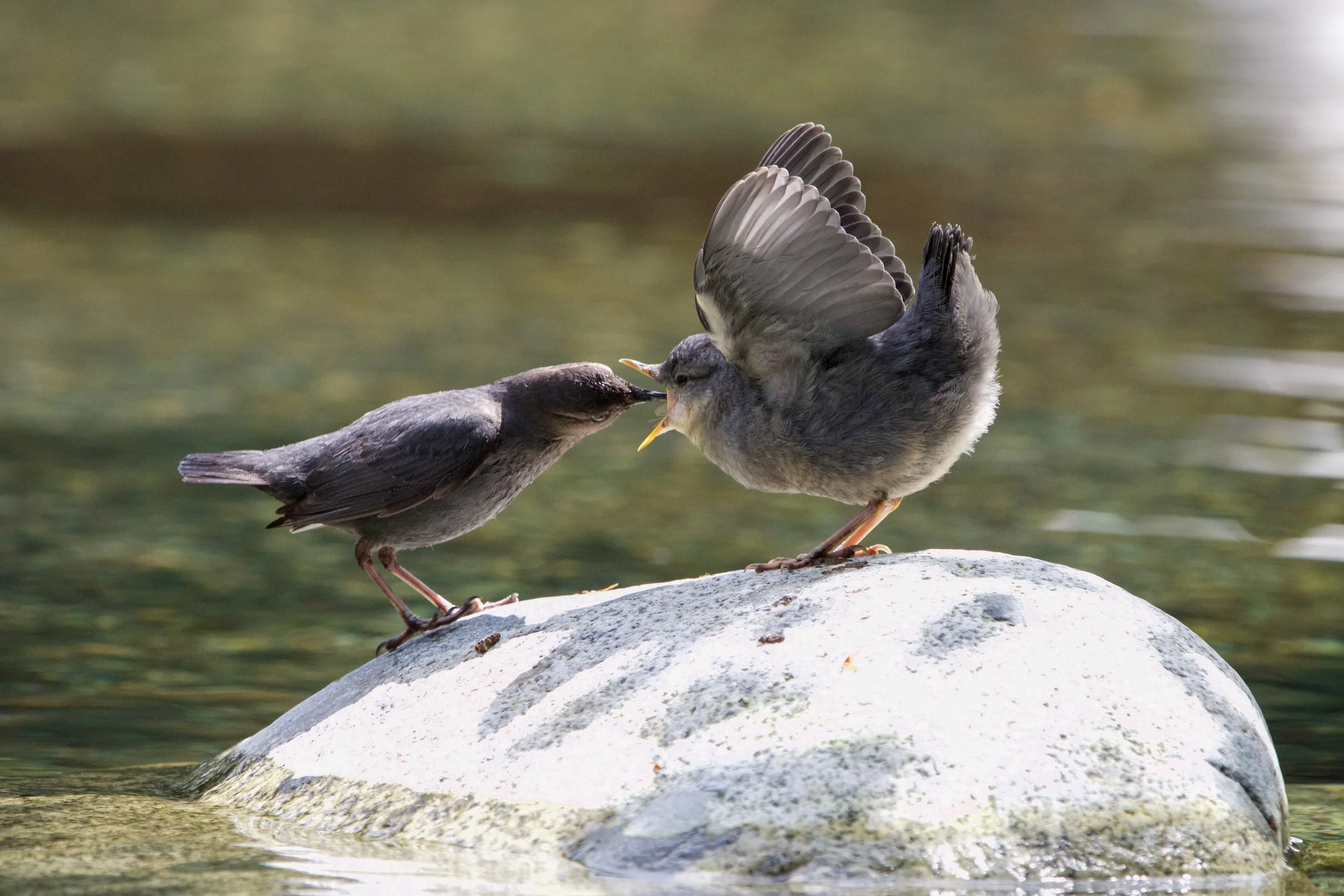
American Dippers / Alex Roy / @thepapabird on Instagram
This endearing photo is of an American Dipper parent and juvenile bird. You can see the juvenile is flapping it’s wings and begging while being fed by it's parent. Notice the yellow beak, which is typical of juvenile birds. Think of it as a “target” to show the parent where to put the food. You can see the parent bird’s beak has turned black. These birds are extra neat because they are the only passerine bird who swims! Dippers live in western Turtle Island along rivers and streams, often at higher elevations. This photo was taken on Vancouver Island by my talented partner Alex Roy.
Where to go Birding
Another question I get a lot is where to go birding. This is a question I love to answer, because it is quite simple- (you can probably already guess what I’m going to say) anywhere!
Anywhere that is accessible, safe, and comfortable for you, is a great place to start.
The best place to bird depends on what you are wanting to get out of the experience and what your context is in terms of mobility. If it is possible for you, parks or local trails through a forested area are great places to start. It is even better if these areas have a variety of habitats such as shrubby forests, swamps, or rivers. The more variety in habitat, the more variety in species.
Many people don’t have easy access to transportation to parks or forests. No problem! You may notice a yard in your neighbourhood has a bird feeder that is popular in the feathered community. Perhaps you can make friends with the owner or simply stop and admire while walking by. To encourage more avian visitors to your own yard, try putting out a bird feeder or bath of your own, or plant native plants in your yard. Just make sure to clean your feeders and baths often to keep viruses and diseases at bay.
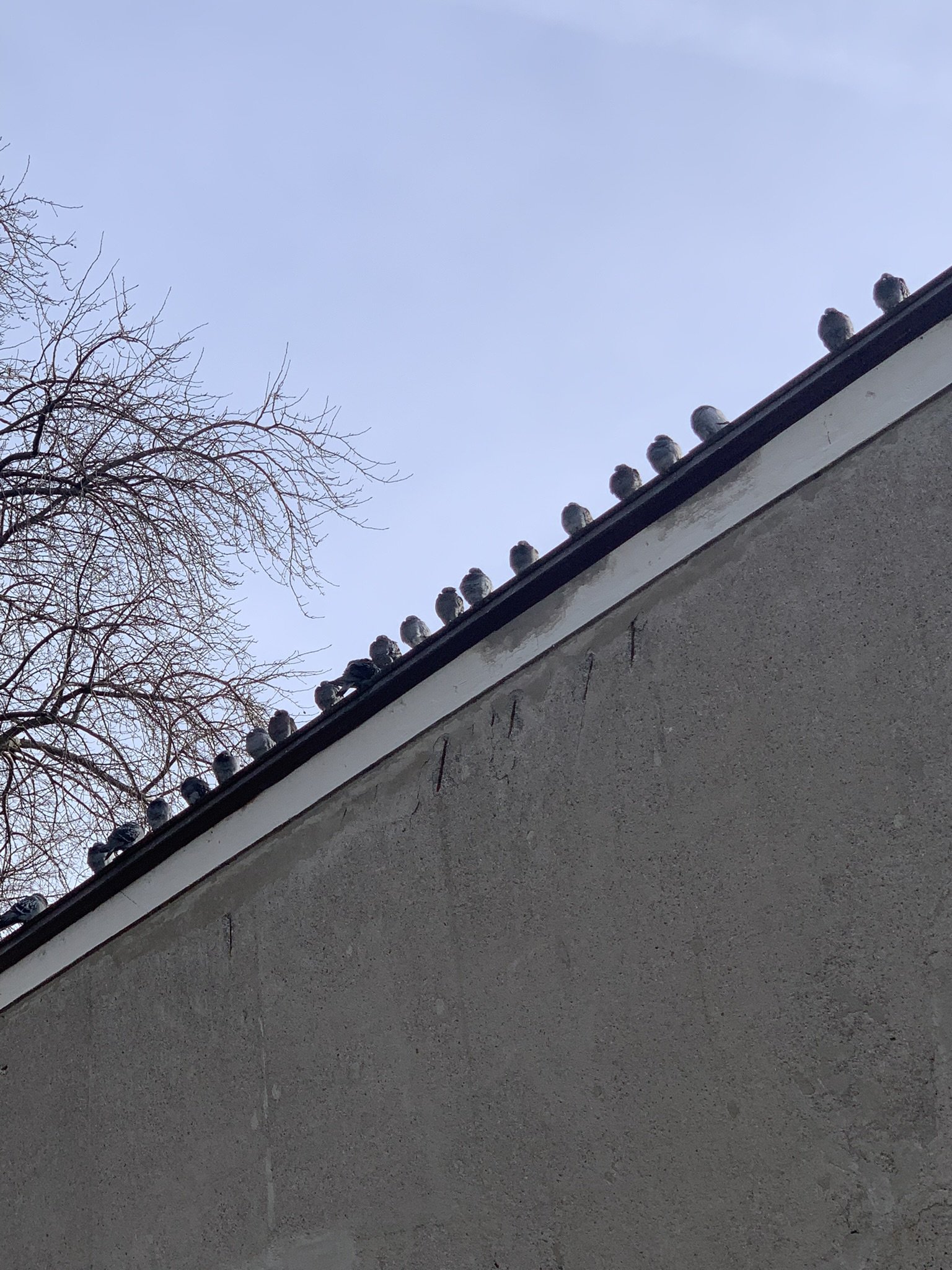
I’m always enjoying the city pigeons in Montreal <3
Thank you again and always for visiting bird • curious and for reading. I hope you have learned a few things and perhaps are inspired to pay more attention to the feathered beauties in your area.
until next time,
xo Kristen